Uber -
Always fun to think about Uber’s long-term prospects. When a company's market starts to mature, m&a can be a double-edged sword, either increasing this growth or hurting it. Uber has such an opportunity.
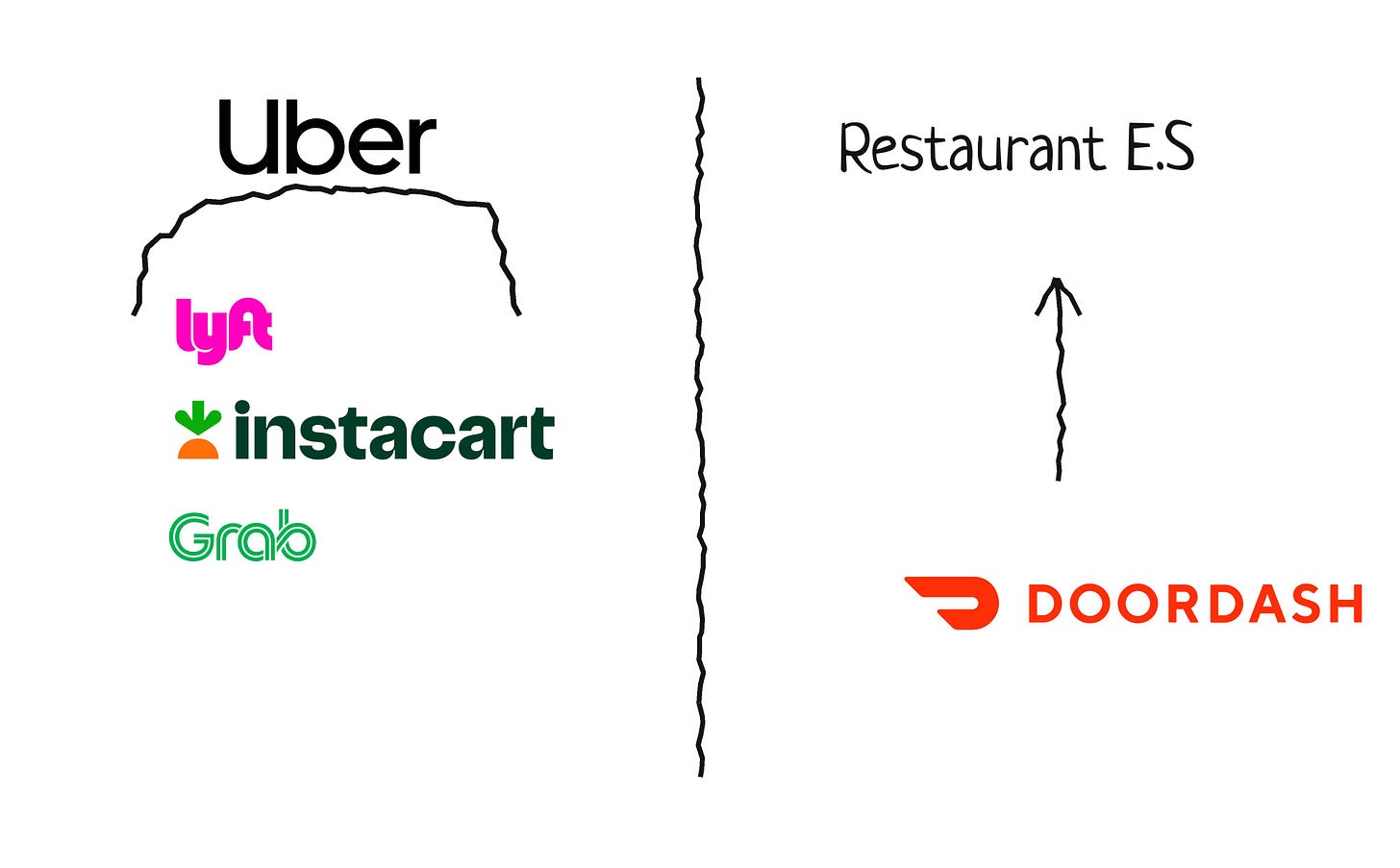
Uber should acquire struggling “one-market” delivery companies. DoorDash should sell enterprise software to restaurants.
The key idea is that DoorDash and Uber seem to be on an inevitable collision course when they cap out growth in their respective markets. Yet they are both large enough to build better and bigger businesses while going in completely different ways. Uber has the largest Driver - Rider - Orderer network in total. So companies such as Instacart, Grubhub, and Lyft are all still around because they focus on a specific vertical in the broader transportation and delivery market enabled through mobile.
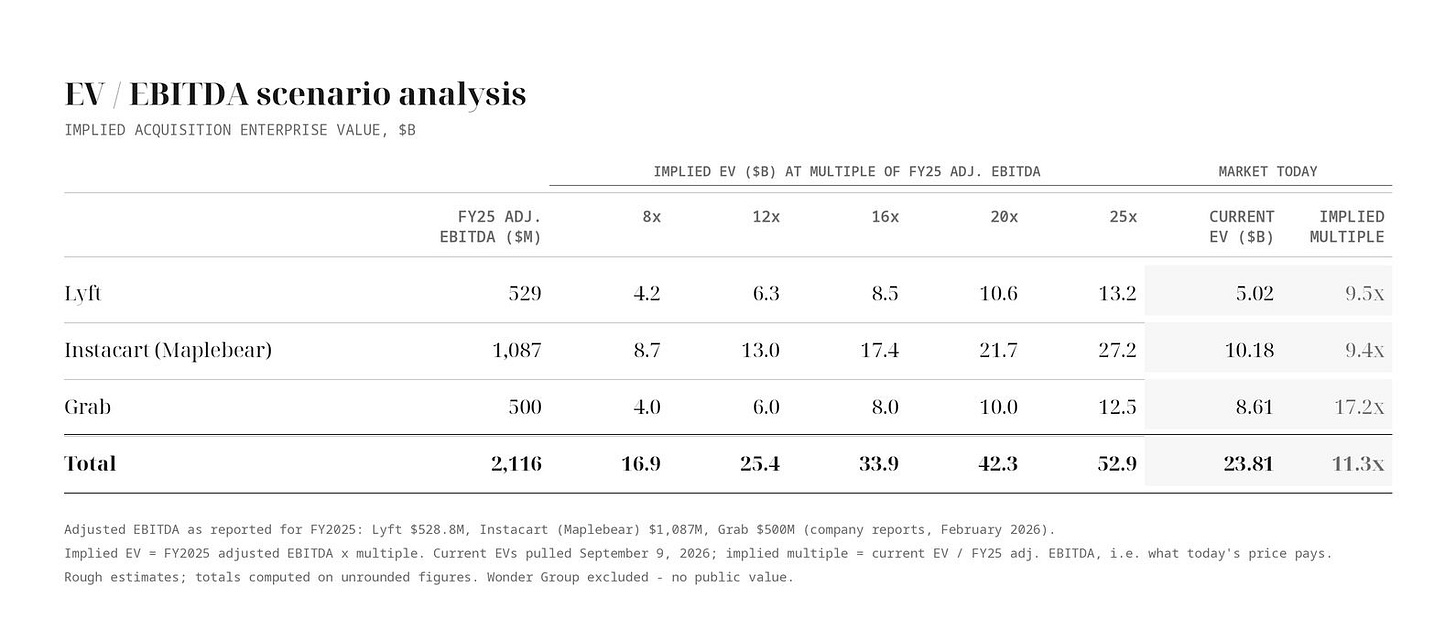
Firstly, lots of discussion on Uber, which I have cleared up in another post: AV and vertically integrated “competitors” are not threats, but rather market size enablers and partners. I predict Tesla and Waymo will be on the Uber Platform as well as have their own D2C. Uber and DoorDash will probably try to bite into each other’s market share, and that would be the incorrect strategic decision. Uber has basically allowed several one-vertical companies such as Lyft, Instacart, Grab, and possibly Wonder Group (When they run out of cash), which they can consolidate and leverage the independent brands to increase growth. The EV/EBITDA scenario below illustrates the acquisition cost using FY2025 adjusted EBITDA. At 12x, Lyft, Instacart and Grab would total roughly $25 billion in enterprise value; at 16–20x, roughly $34–42 billion. These are scenarios, not current offers or transaction prices.
Rideshare/Delivery only have regional network effects, so they should operate these brands separately and realize the opportunity for these firms to continue to grow their top line. The real opportunity is to connect those brands to Uber’s advertising network and Uber One. Uber reported 50 million Uber One members in the first quarter of 2026, with members generating half of Mobility and Delivery Gross Bookings. An expanded bundle could make the membership more valuable; Uber does not report standalone operating profit from Uber One or its ads business.
Consolidation in this industry is imminent; it is enabled because of a concept I discussed previously -
Focusing on verticals on paper seems like a bad idea, and in the long run, the incumbent tends to eat the share slowly but surely. But there is a short- to mid-term period where focusing on an X market allows for sustainable profits and strong brand affinity. Eventually, the incumbent includes the vertical in their business, and they leverage their scale and greater distribution to take more share in the X vertical. Eventually leading to consolidation of sorts. The reason a focus market succeeds in the short to mid term is that the incumbent cannot focus on every market, and cannot successfully market a product for the X vertical. Hence, it allows for a startup to build a business around that X market and use it as leverage to expand in a land grab. It is this tug-of-war for market share that eventually leads to consolidation, where the incumbent acquires the focus market. Usually, if the company they acquired has a consumer brand, it would be best to leave it operating as itself. Such as Uber’s acquisition of Postmates.
The VC funding in the ridesharing delivery space allowed for the Instacart of the world to reach great heights, while being a focus market. While no guarantee can be made of any of these transactions, Wonder Group acquired Grubhub in 2025, and in July 2026 Uber announced a cash offer for Delivery Hero. The proposed deal spans businesses in 50 markets, not just Germany; it remains subject to conditions and Uber expects it to close in the second half of 2027.
DoorDash -
DoorDash seems to have an interesting strategic play in all this. Trying to compete with Uber for a greater share in delivery would be difficult and costly; hence their strategic decision to sell restaurant enterprise software and their acquisition of SevenRooms.
While the restaurant technology industry has many players, Toast being an example of the low-end disruptor, DoorDash is a chokepoint for restaurants, as delivery has become an important demand channel for many of them. So surely, over time, DoorDash can consolidate several restaurant enterprise products and bundle them with its delivery and create a fully integrated restaurant management system.
Most companies in the delivery space settle on bolting on additional monetization methods such as a subscription product - UberOne, DashPass, Instacart + etc, and also creating an advertising marketplace. While these are great strategic options, they are heavily influenced by the success of the core business. DoorDash wants to move upmarket, which seems like the natural thing to do, and capture a larger share of what the restaurant industry has to offer.
This strategy will be a slower and more managed strategy, as DoorDash could see regulatory risk if they try to leverage its valuable position in the industry too aggressively against companies like Toast. Of course, they could just try to acquire their way up, which they already have in specific parts of the industry, such as SevenRooms; regulatory risk may prevent them from just going and buying Toast, so the more likely outcome is some kind of partnership/integration where DoorDash gets a fee on the Toast platform, leading to high-margin revenue in the space.
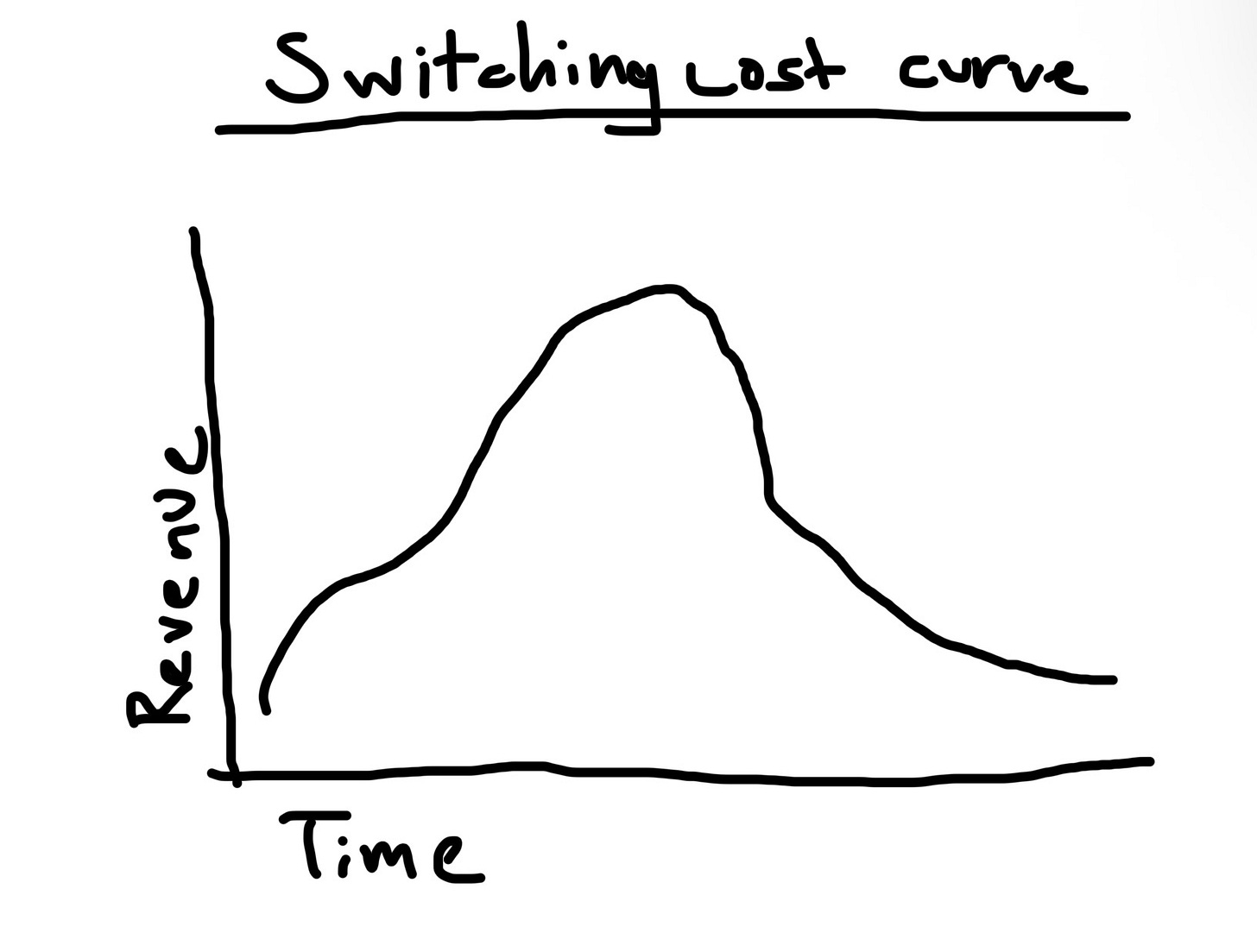
The power of switching costs is unreal, although they do not necessarily grow revenue or increase profits; rather, they just allow a company to maintain what they already have built. An example in the restaurant enterprise space is PAR Technology, which historically sold large physical systems to mid- to large enterprises, and this gave them great cash flows while this was the major technology, but then the transition through the low end of companies like Block and Toast has forced PAR to begin to acquire its way out of the innovator's dilemma.