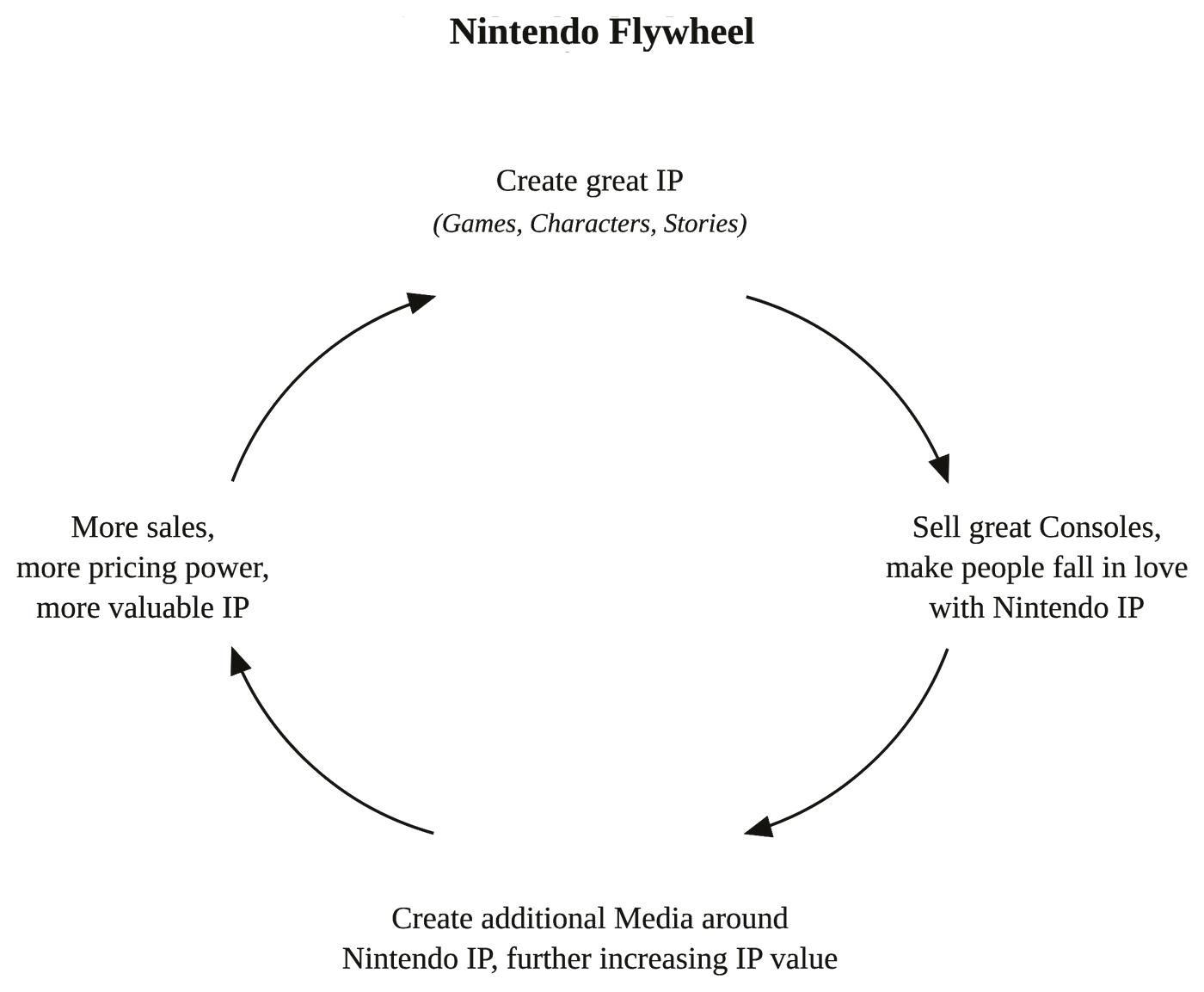
Much discussion has been about how Nintendo has under-monetized its IP and its stubbornness in sticking to the console + high-margin software business. Yet Nintendo has built a console platform with its own rich first-party IP, plus a third-party developer ecosystem for indie and middle-market games.
What is the future, and can there be real shareholder value created? The case is not that Nintendo is cheap simply because it owns great characters. The question is what it can earn from those characters over time, without weakening the games that made them valuable.
Nintendo does not have to constantly maximize short-term revenue. Rather than put its characters everywhere and dilute them, it can be selective about how it uses them. That patience is part of the thesis, but it also means shareholders cannot assume every opportunity will be monetized as quickly as possible.
Revenue is still cyclical. New console generations bring hardware launches and a new software cycle, while the later years of a console's life can look very different. Nintendo is moving towards a more diversified media company. IP is a cornered resource; that is the main power/moat Nintendo really has. Its ability to use its IP in theme parks, movies, TV shows and collectibles will help define the future of the business.
Games at the center of the media flywheel
Similar to Disney, the core of the flywheel for Nintendo is making great games. Building games, marketing them to consumers and creating stories has built this collection of IP. Movies give the characters another way to reach people. But box-office success is not the same as Nintendo's revenue or profit, and the investment case should not depend on an assumed cut of ticket sales.
The theme park agreement with Universal gives Nintendo another channel for its characters. This is a different model from owning and operating the parks itself. The opportunity is to earn from the IP without carrying all the costs of the distribution channel. I would not put a precise annual parks estimate into the thesis without disclosed economics.
Beyond that are collectibles and Nintendo's interests in The Pokemon Company. Nintendo Switch Online offers a recurring subscription and access to older games. This is largely nostalgia-fueled, from the days of playing on the Game Boy and the NES. The important point is the ability to keep earning from the same characters and game library, not an estimated subscription run rate.
Reducing dependence on the console cycle
By becoming a media company, Nintendo can try to rely less on console cyclicality and focus on what it has done for generations: make great games, characters and stories. Digital software, subscriptions and licensing could improve the revenue mix. That is an opportunity, not a claim that media already dominates the business or that the console cycle has disappeared.
Hence the case for a long-term free cash flow business with less dependency on each new console generation. The closest comparable to this vision of Nintendo is Disney, although their economics are different. Nintendo's core business is still making great games and consoles, with fixed costs and booms and busts. The media flywheel can create shareholder value if a wider audience turns into sustained profit. If it does not, this remains a cyclical console business with great characters.