GE Acquires RCA - 1985
The greatest acquisition ever, which nobody seems to discuss, perhaps because of the oddness of the unrelated markets, or because it has been more than four decades. Though I think the story is interesting and useful for m&a and business model strategy today. Conglomerates are like abstract art in the corporate world
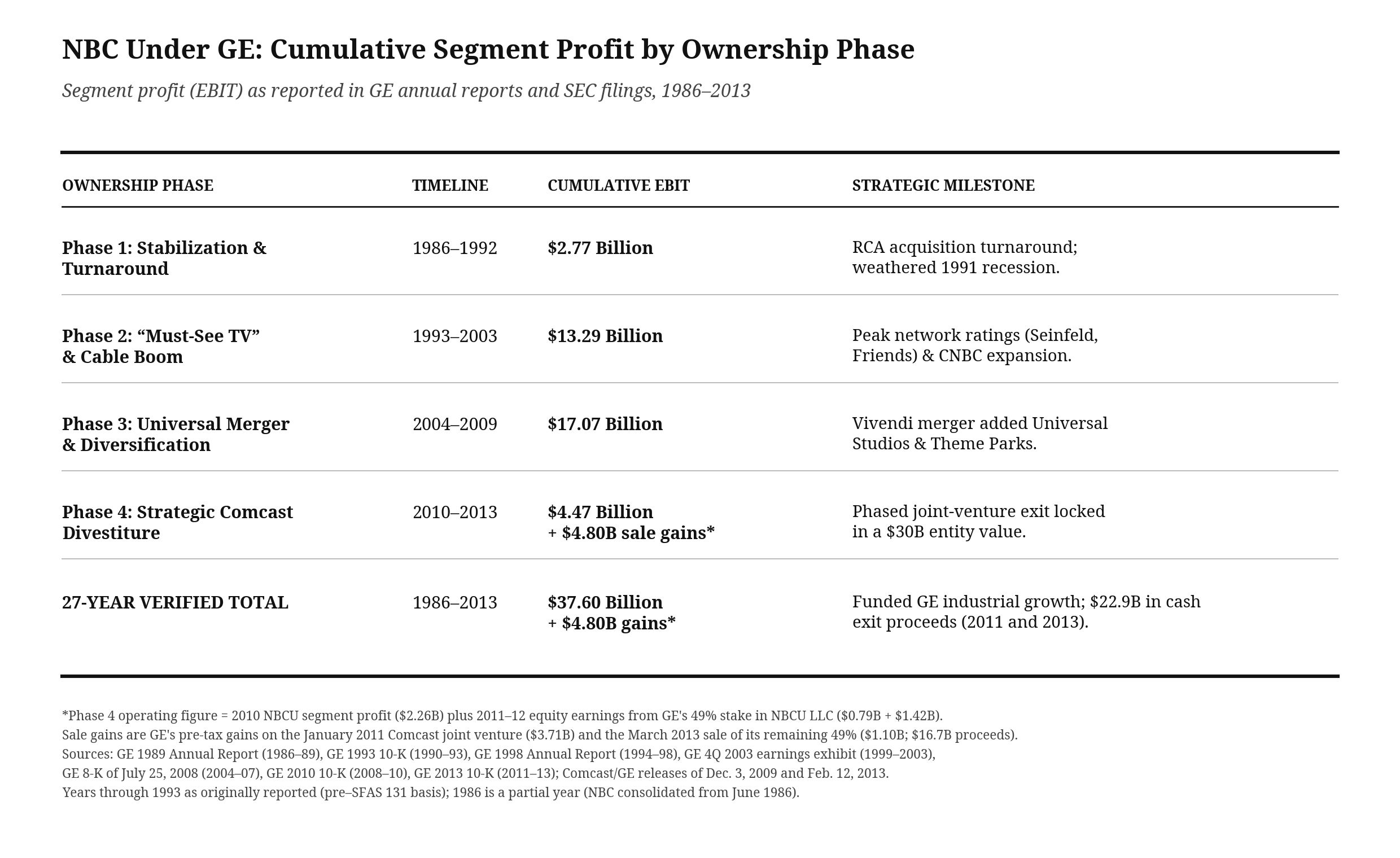
The history of RCA started with a joint venture where, ironically, GE owned a 30% stake. Cut short, the government ordered this to be divested, citing monopoly concerns. Fast forward to the 1980s, and the media industry was becoming less regulated, and Jack Welch was looking to take advantage. RCA had been struggling; with increasing globalization, the dominance of the once-premier technology radio manufacturer was falling away. I honestly believe the great acquisitions are often crown jewels hidden in a conglomerate, hence my passion for conglomerates. RCA was one of them (Fun Fact: they owned Hertz Rental, which they sold in 1985), and hidden inside was the gem Jack Welch was looking to unlock: NBC, one of the big three broadcasters. The beauty of this deal, from a financial perspective, is that although the acquisition price was a $6 billion all-cash deal, because of the depressed and lagging financials of the products business, the great economics of NBC were hidden. And following the sale, GE could use its leverage to sell off all the miscellaneous assets that RCA had apart from NBC, which all but paid for the deal in totality. Consumer, Records, Defense, etc, all paid for the deal. So if we were to judge the financial metrics, there is technically nothing but upside.
During GE’s 27-year ownership, NBC pulled in roughly $30 billion+ in operational cash flows and hit shows such as Seinfeld. Then the two-part sale in the early 2010s to Comcast - $6.2 billion in 2011 and $16.7 billion for the remaining 49% in 2013 - for a total of roughly $22.9 billion. Resulting in a total of $53 billion in cash for an asset they got for free at a garage sale. Not to mention GE leveraging the content of NBC to create a valuable cable bundle, resulting in even more premium cash flows. Needless to say, the financial result was a masterclass. Ironically, they bought it in a fire sale and sold it as well, in desperate times, which left significant money on the table, not that they had any choice following the 2008 financial crisis. This leads to this year’s news about NBCUniversal being spun out from Comcast; GE did merge NBC and Vivendi Owned Universal in 2004, and Vivendi retained a 20% stake.
The strategic implications of this deal are interesting, really in that at some point a firm investing in its own capex hits diminishing returns and looks to grow through m&a. Too often they look at what does well today, and overpay. The playbook of acquiring hidden crown jewels is not implemented enough and should be used more in strategic situations. Looking today, different sectors, such as SaaS, are depressed from historic peaks, perhaps justified, yet still undervalued considering the robust switching costs inherent to their nature of the business. Several opportunities exist to bundle existing single-feature SaaS firms and upsell them through larger firms' extensive product catalogs. Companies like Salesforce, Microsoft, Atlassian, etc should acquire such firms, ex. Dropbox, Notion, Intercom (Fin), and take the existing embedded customers and upsell them, and leverage the structural underlying moat of switching costs, which allow for this.
The nature of an asset such as NBC can thrive within a conglomerate because it can behave somewhat like a startup. Perhaps Stripe stays private for the same reason NBC thrived inside GE: it can leverage the funding and resources of a larger parent without the quarterly pressures Wall Street imposes. It allows for more risk, and often equivalent innovation, with less friction for deals such as the NBC - Universal deal, which combined content with physical assets and pricing power, increasing cash flows, something that may have been opposed had NBC been its own public entity. That is why I think more firms should be open to being acquired by conglomerates and not be stubborn, when clearly their future as a public company is difficult because there are great costs to reset and build a truly defensible business; being part of a conglomerate allows for such resets. An example of this internally is Sony and PlayStation. Surely the investment made in PlayStation, the power behind each console, would not have been possible without the balance sheet of Sony and the distribution to compete with Nintendo. Today PlayStation accounts for 32% of Sony’s operating profit, all from an internally funded project. Conglomerates are like a bunch of ongoing experiments usually funded through one or two major cash cows, and each funding the next, Amazon being a prime example.
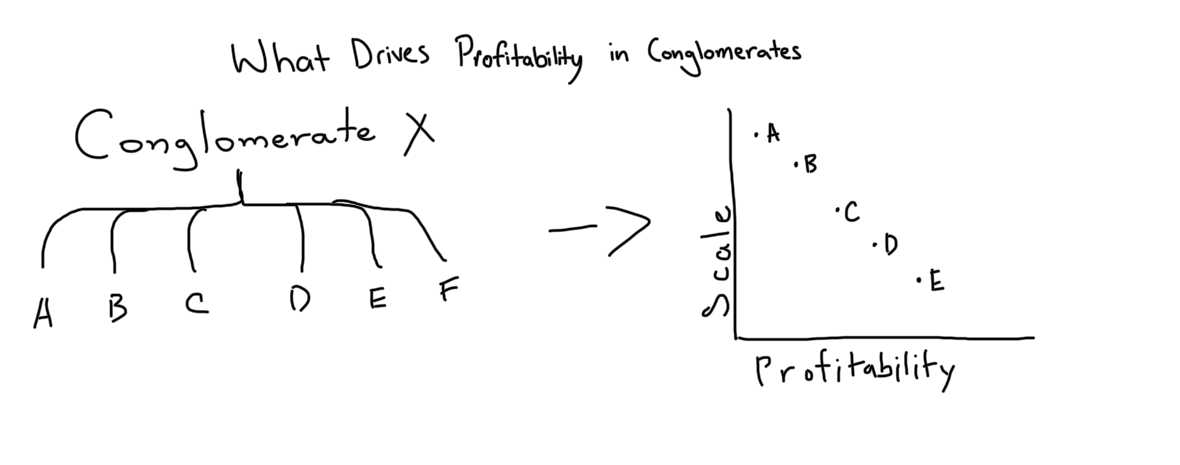
Another example of this, while this is more speculative, you can see why it can work: many conglomerates own food businesses with extreme brand loyalty that may be depressed for various factors and could be a cash cow hidden on a balance sheet. I am confident these opportunities exist today and should be looked for, specifically in m&a. GE acquiring RCA was no small feat, at the time the largest non-oil transaction, and selling off any businesses that had overlap with GE had to be mind-boggling for the markets. Great acquisitions often make or break firms; where would Meta be without Instagram, or Disney without ESPN?
Conglomerates are interesting to study for this reason exactly; what seems like a garbage heap, if looked at closely, can be gold.